
61 paintings including 16 works from the State Russian Museum and the Tretyakov Galleryin the Main, Mezzanine, and Lower Galleries
Visitor’s Guide
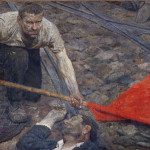
Geli Mikhailovich Korzhev (1925 – ) is recognized by contemporary Russian art historians as one of the most influential painters of the second half of the 20th century; his work has influenced the style and subjects of two generations of post-WWII Russian artists. In collaboration with curators at the State Russian Museum (St. Petersburg) and the State Tretyakov Gallery (Moscow), TMORA will present an exclusive retrospective exhibition of 61 paintings that includes exceptional examples of Korzhev’s paintings from all segments of his remarkable career. 16 of the paintings are on loan to TMORA from the two largest Russian national museums. TMORA will dedicate its entire exhibition facility to this exhibition that represents the first solo exhibition for a single artist at the museum. This exhibition includes representative examples of works from every stage of Korzhev’s artistic life.
“The Museum of Russian Art has a fascinating show of large-scale photos of contemporary Russia by Andrew L. Moore of New York. Moore has a fabulous eye for design and detail, and seems to have had unparalleled access to everything from private apartments in St. Petersburg, to costume closets at the Kirov Ballet, to abandoned missile sites in remote villages. His stunning color photos… document a country undergoing dramatic economic and political changes.” (Mary Abbe, Star Tribune)
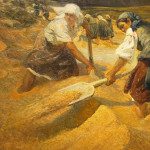
An exhibition of approximately 50 paintings featuring Russian landscape scenes and images of Soviet agriculture. The Virgin Lands project, communal farming and the social significance of agricultural development in Russia will be presented in a visual tour of all the varied geographical regions of the former Soviet Union.
The masterful oil paintings that are included in the Johnson Collection of Russian and Soviet art are only one dimension of the consummate artistic training and skills developed by generations of Russian artists. Works on paper represent another facet of Russian visual artistry. Russian art institutes provided rigorous training in drawing and composition through which individual artists became attracted to the media of graphite, charcoal, pastel and conte’ crayon. Alternatively, various artists became enamored by the fluid qualities provided by watercolor and gouache as well as by the spontaneous painting techniques required to effectively utilize these materials. The diversity that is inherent to 20th century Russian art is displayed throughout this exhibition of works on paper.
“Colors of a Russian Winter, an exhibit featuring 52 colorful paintings, presents a cross-section of winter landscapes and activities that exist within Russia, from the coastal to the desert climates. “The exhibit is structured to bring life and color to the cold season, and to dispel the notion that winter in Russia is simply a panorama of white ice and snow,” says Bradford Shinkle, IV, president and director of TMORA. Winters have historical significance to the country in terms of the development of the Russian psychic character and in shaping major events. Historians credit the severity of the winter season for helping the Russians defeat both the invasions of Napoleon and Hitler. Several paintings included in the exhibit refer to these events, in addition to happy images of sledding, skiing and other winter activities.” (Minnesota Monthly)